Analyzing Scene Compositions From Barton

Introduction

This post collects scene compositions from Barton, a first-person sci-fi puzzle adventure where the player can hold an open dialogue with a companion bot named Barton.

This breakdown analyzes five compositions from environments I created in Barton and explains how each shot supports gameplay readability, pacing, and atmosphere.
Jump to a Composition

Composition #1: Entering The Bazaar

Composition #1: Entering The Bazaar

In this composed shot, the player transitions from a barren canyon into a communal bazaar that is now abandoned. The player enters from higher elevation to read the space as a whole before descending.

The rocky outcropping on the right blocks the facility view and wraps the player through the canyon. A central pillar and surrounding columns become the dominant focal point of the composition.

The route pulls the player down to meet Barton at this pillar and begin the journey together.

Composition #2: Trainyard & Facility Exterior

Composition #2: Trainyard & Facility Exterior

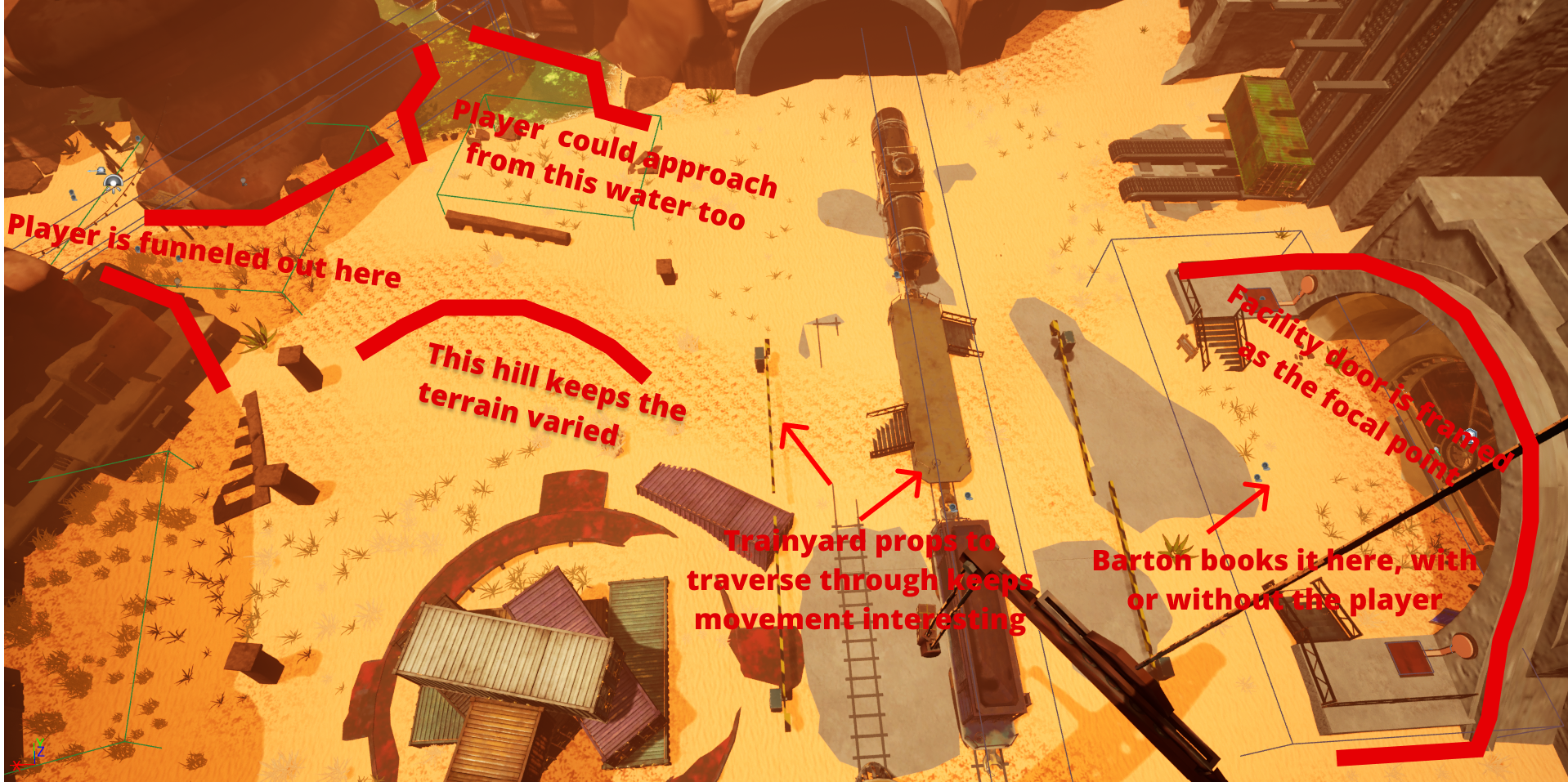
After introductions, the player and Barton approach an abandoned research facility towering overhead. From the Bazaar, canyon walls and nearby props frame the facility door as the focal point while the trainyard opens scale and establishes prominence.

The walk from Bazaar to door is near-linear, so I used terrain cresting, rail meanders, and Barton’s pathing toward the door to maintain momentum and build anticipation.

Facility Exterior Markup

Composition #3: The Entry Room

Composition #3: The Entry Room

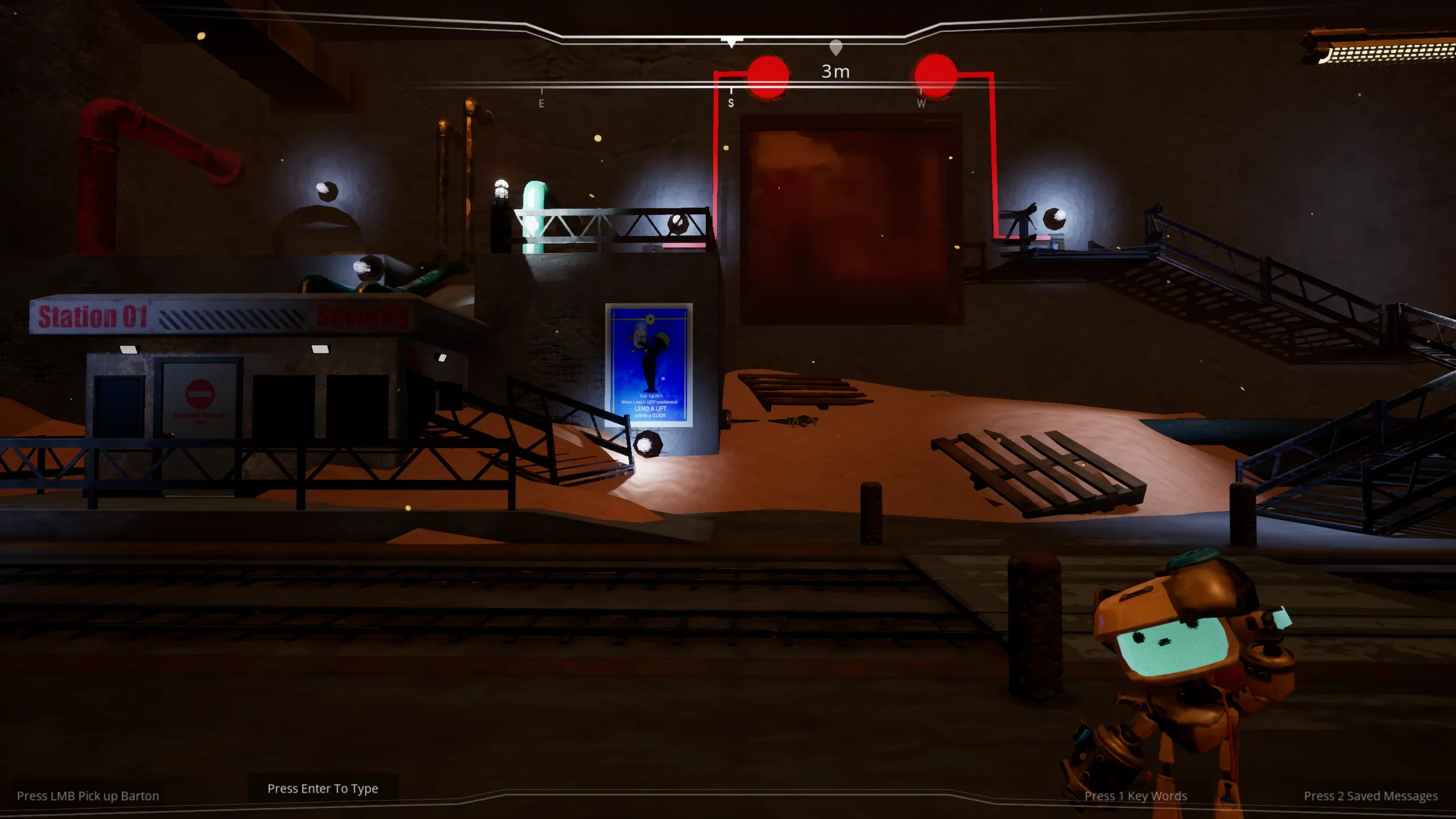
After the first puzzle, the player enters the facility proper. A red blast door with two nearby interactables is framed as the dominant element; color contrast, slope direction, and staircase lines guide attention upward.

A lone blue sign provides immediate context for puzzle completion, directing the player to pick up Barton so he can reach a lever.

This creates a new dialogue beat between player and companion while supporting mandatory tutorialization through spatial cues and diegetic signage.

Composition #4: The Silo Floor

Composition #4:The Silo Floor

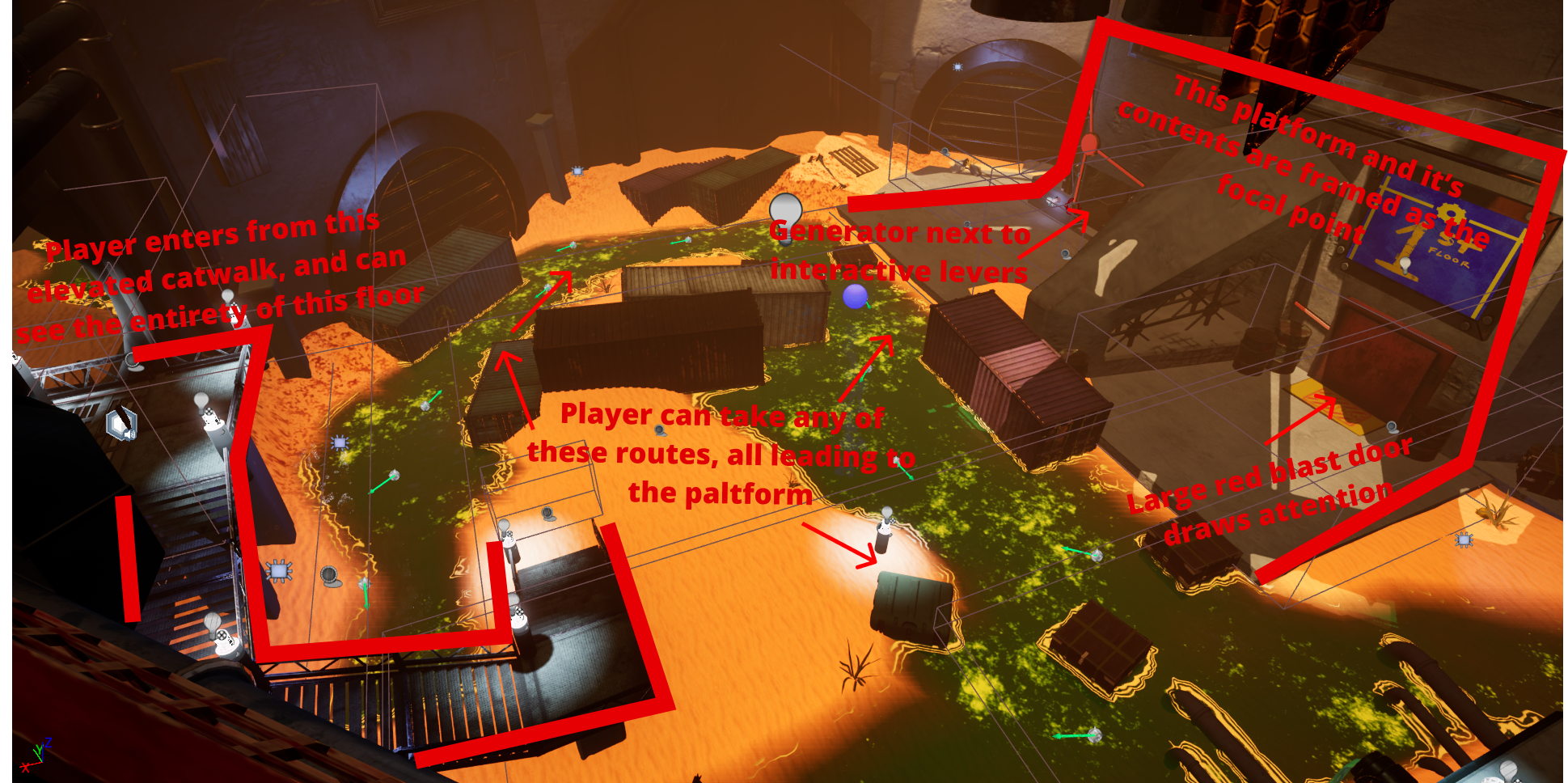
After the entry room, the player passes through a short drain pipe as a pacing reset before entering the main silo where the rest of the experience unfolds.

Playtesting showed most players focused on lower-floor traversal and puzzle content rather than the rocket above, so composition and pathing were tuned to prioritize immediate gameplay clarity.

The elevated entrance gives a full read of the explorable space before commitment, surfacing core affordances and available routes.

A generator platform and locked door on the opposite side serve as the focal destination, reinforced by converging sightlines.

Silo Floor Markup

Composition #5: Catwalk Traversal

Composition #5: Catwalk Traversal

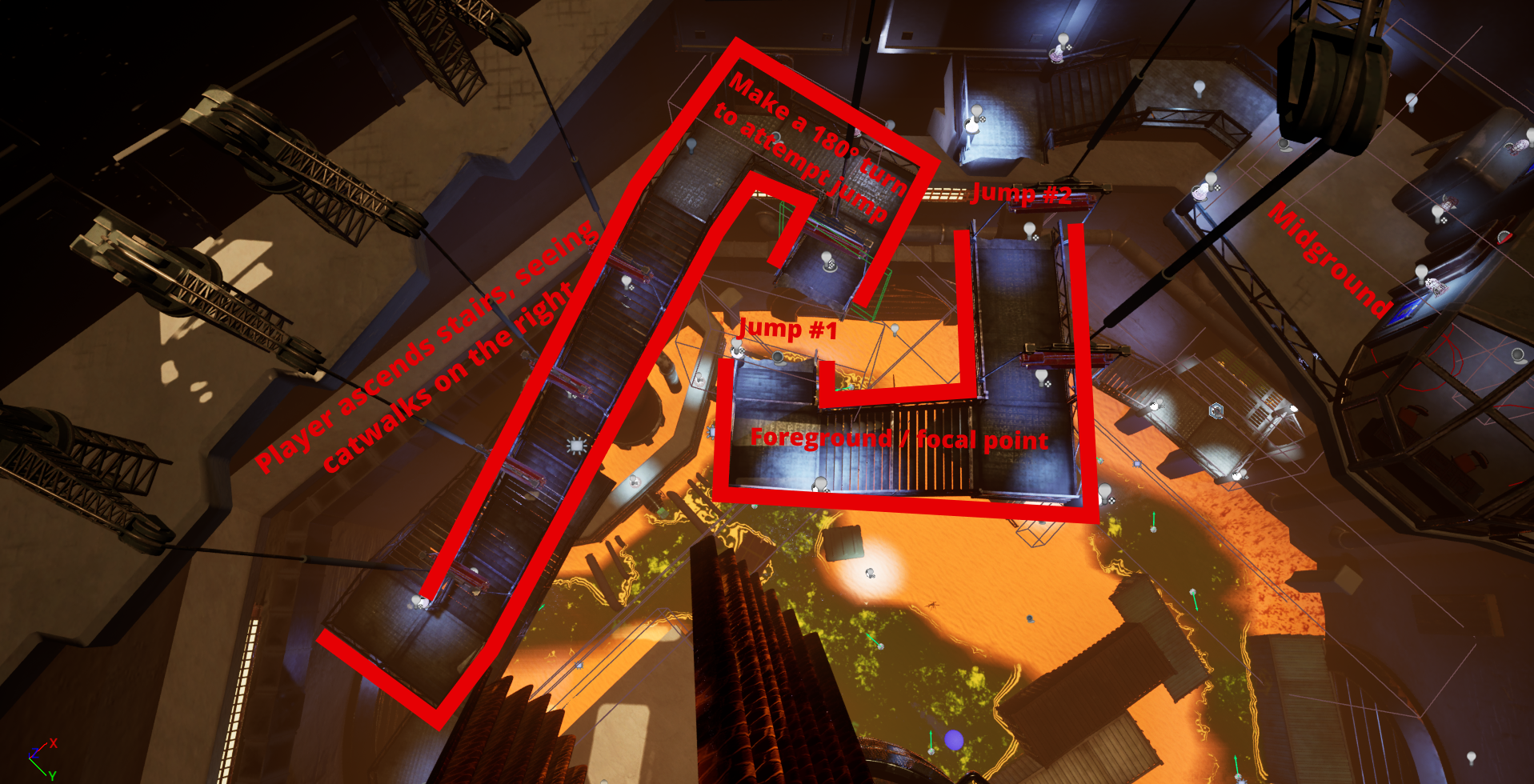
As the player ascends the second floor, two catwalk gaps are revealed before the first jump attempt. The foreground frames the immediate challenge while the background previews upcoming traversal.

This staging surfaces risk before commitment, helping players make informed movement decisions. Barton’s request to be carried across reinforces companion interaction in the same beat.

Catwalk Traversal Markup

Conclusion

Barton Screenshot

These compositions from Barton show how spatial framing can surface key information while preserving player agency over where to go and what to do next.

Guidance can be explicit, like a dominant red door, or subtle, like staircase direction, rock framing, and prop alignment that gently steer attention.

None of these shots were correct on the first pass. Each one evolved through repeated iteration, playtest feedback, and environment-art collaboration to improve saliency, pacing, and contextual clarity with an AI companion.

When done well, composition gives players the context needed to read a space quickly without flattening exploration.

Thanks for reading.

- Carter Hoke